
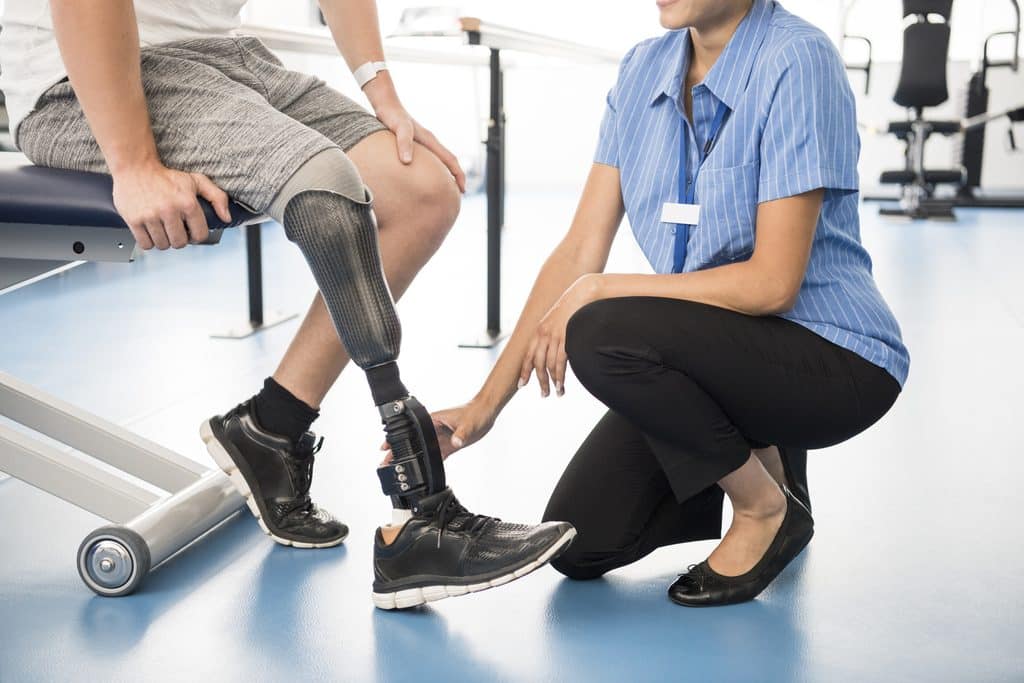
Living with nerve pain after an amputation can make everyday activities, rehabilitation, and prosthetic use more challenging. Targeted muscle reinnervation (TMR) is an advanced surgical technique that redirects severed nerves, helping reduce certain types of post-amputation pain while potentially improving prosthetic function.
At her Chicago, IL, practice, Dr. Lindsay E. Janes is a fellowship-trained plastic and reconstructive surgeon with specialized expertise in peripheral nerve repair and extremity reconstruction. She provides targeted muscle reinnervation to help eligible patients manage nerve-related pain and work toward greater comfort, mobility, and independence.
What Is Targeted Muscle Reinnervation?
Targeted muscle reinnervation is a specialized nerve transfer procedure that connects severed peripheral nerves to nearby nerves supplying healthy muscles. This gives the affected nerves a new destination for growth and helps prevent the formation of painful nerve endings called neuromas.
TMR was originally developed to improve control of advanced prosthetic devices. Today, it is also used to treat or help prevent chronic nerve pain following limb loss, including phantom limb pain and residual limb pain.
Who Is a Candidate for Targeted Muscle Reinnervation?
TMR may be recommended for patients experiencing nerve-related complications after an amputation or those preparing for a planned amputation.
Potential candidates include individuals who:
- Experience persistent phantom limb pain, including burning, aching, or shooting sensations in a missing limb
- Have painful neuromas that cause tenderness or discomfort in the residual limb
- Struggle with nerve pain that interferes with prosthetic use or daily activities
- Are undergoing a planned amputation and may benefit from preventive nerve management
- Could benefit from improved muscle signaling for a compatible myoelectric prosthesis
Not every patient with post-amputation pain requires surgery. Dr. Janes evaluates symptoms, medical history, and previous treatments to determine whether TMR is appropriate.
How Is Targeted Muscle Reinnervation Performed?
During TMR surgery, Dr. Janes identifies the affected peripheral nerves and carefully connects them to small motor nerve branches supplying nearby muscles. These connections allow regenerating nerves to establish new pathways rather than remaining without a functional target.
TMR may be performed alongside an amputation or as a separate surgery following recovery. The technique used depends on the location of the damaged nerves, the muscles available for nerve transfer, and the patient’s specific needs.
How Can TMR Improve Prosthetic Function?
For certain patients with upper extremity amputations, TMR may also improve control of advanced myoelectric prostheses. These devices detect electrical signals generated by muscles and translate them into prosthetic movements.
By redirecting nerves into selected muscles, TMR can create additional muscle signals that may support more intuitive prosthetic control.
Potential benefits depend on amputation level, available nerve and muscle tissue, prosthetic technology, and rehabilitation progress. Not every patient undergoing TMR will require or benefit from a myoelectric prosthesis.
What to Expect During Recovery
Recovery varies depending on whether TMR is performed during an amputation or as a separate procedure. Patients may experience temporary soreness, swelling, or changes in nerve sensations as the surgical area heals.
Nerve regeneration takes time, so improvements in pain or prosthetic control may develop gradually over several months. Some patients may continue experiencing symptoms despite treatment.
Rehabilitation may include physical therapy, occupational therapy, and prosthetic training to help patients adjust to new movement patterns and regain daily function.
Why Choose Lindsay Janes, MD, for Targeted Muscle Reinnervation?
Dr. Lindsay E. Janes is a fellowship-trained plastic and reconstructive surgeon with advanced expertise in peripheral nerve surgery, hand reconstruction, and complex nerve transfers. She earned her medical degree from the University of Maryland School of Medicine before completing her plastic surgery residency at McGaw Medical Center of Northwestern University. She then completed a fellowship in hand and peripheral nerve surgery at the University of Pennsylvania.
As an Assistant Professor of Surgery at Northwestern University Feinberg School of Medicine, Dr. Janes contributes to clinical care, research, and surgical education. She has authored numerous peer-reviewed publications and presented nationally on topics involving nerve reconstruction and limb salvage.
Her approach to targeted muscle reinnervation combines specialized surgical expertise with personalized treatment planning, taking into account each patient’s pain symptoms, prosthetic needs, and long-term rehabilitation goals.
Explore Targeted Muscle Reinnervation in Chicago, IL
Persistent nerve pain after an amputation can affect comfort, independence, and quality of life. Targeted muscle reinnervation may help manage these symptoms while supporting long-term rehabilitation and prosthetic function.
Dr. Lindsay E. Janes provides individualized evaluations to determine whether this advanced surgical approach fits each patient’s needs. To schedule a consultation in Chicago, IL, call (312) 695-6022.