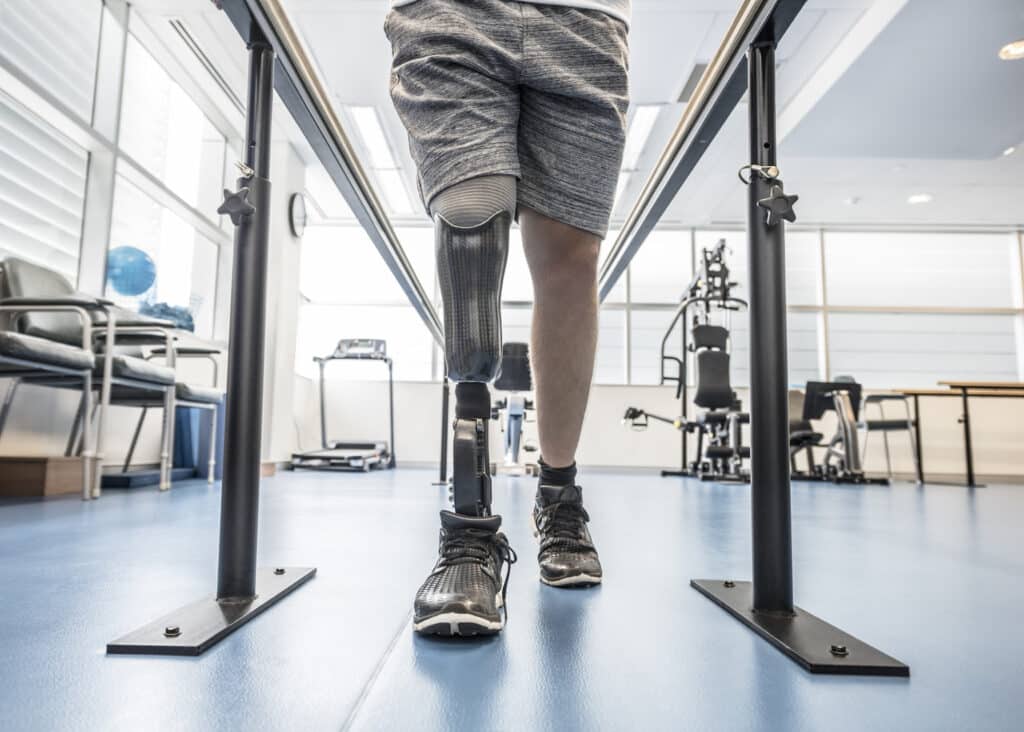
After limb loss, the road to recovery involves more than just healing from surgery. It also includes rebuilding function, managing pain, and adapting to a new prosthetic device.
To navigate these challenges successfully, you need an elite fellowship-trained amputee rehabilitation specialist like Dr. Lindsay E. Janes.
In her Chicago, IL, practice, Dr. Janes offers a highly specialized treatment, Targeted Muscle Reinnervation (TMR), that helps with all three of these things.
The Goals of Amputee Rehabilitation
Amputee rehabilitation involves more than recovering from surgery alone. For many patients, rehabilitation is also about improving comfort, adapting to physical changes, restoring daily function, and building confidence throughout recovery. Treatment may include pain management, prosthetic integration, physical rehabilitation, and specialized surgical techniques designed to support long-term mobility and independence.
Each patient’s recovery experience is different depending on the level of amputation, lifestyle, functional goals, and overall health. Dr. Lindsay E. Janes works closely with patients to develop personalized treatment plans that support both physical recovery and quality of life after limb loss.
What Is Targeted Muscle Reinnervation?
Targeted Muscle Reinnervation is a microsurgical procedure in which Dr. Janes reroutes severed peripheral nerves from an amputation to nearby, otherwise unused muscles.
These target muscle sites serve as biological “endpoints” for regenerating nerves. Instead of forming painful neuromas, the nerves can reinnervate muscle tissue and send more organized signals.
Originally developed to enhance prosthetic function, TMR has since been demonstrated to alleviate neuroma and phantom limb pain.
In addition to helping patients feel more in control of their prosthetic limb, the procedure also provides an active way to manage nerve-related pain symptoms.
How TMR Enhances Prosthetic Control
When a nerve is connected to a new muscle, that muscle begins to receive signals once controlled by the missing limb. These signals can be detected by surface electrodes and interpreted by a myoelectric prosthesis, a prosthetic device that uses muscle signals to help control movement.
As a result, patients can perform intuitive movements such as opening and closing a hand or rotating a wrist using their natural brain impulses.
This control is often more precise and responsive than traditional prosthetic systems that rely on less specific muscle groups. With TMR, patients can regain a level of coordination and function that feels more lifelike.
The Benefits of TMR During Rehabilitation
Targeted Muscle Reinnervation can play an important role in the amputee rehabilitation process by helping improve both comfort and prosthetic function. By redirecting nerves into healthy muscle tissue, TMR may improve communication between the body and a prosthetic device while also helping address nerve-related pain.
Potential benefits of TMR may include:
- Reduced neuroma pain
- Improved management of phantom limb pain
- More intuitive prosthetic control
- Enhanced coordination and movement
- Better muscle signal detection for myoelectric prosthetics
- Support for long-term functional recovery
Treatment recommendations are always based on the patient’s individual condition, symptoms, and rehabilitation goals.
Who Is a Candidate for Upper Extremity TMR?
TMR is appropriate for patients with upper limb amputations who experience phantom pain, neuroma-related discomfort, or difficulty using a prosthesis.
Or, TMR can be performed at the time of amputation (immediate TMR).
It’s not for spinal cord or brachial plexus injuries.
Patients must be generally healthy, which is a requirement for any surgery.
What to Expect During and After Surgery
TMR is performed under general anesthesia. Using a microscope and specialized instruments, Dr. Janes carefully transfers the nerve endings to targeted muscle sites, typically selecting muscles that are no longer needed for other functions. It’s highly precise work for which she draws upon her extensive microsurgical training and experience in advanced nerve coaptation techniques.
Following surgery, you’ll participate in a rehabilitation program that includes physical therapy and training with your prosthetic team. Over time, your body learns to send signals through the newly formed nerve pathways, thereby improving both comfort and control.
If you have TMR to manage existing nerve pain, you can resume work in as little as two weeks. If you have TMR immediately after amputation, you can start prosthetic fitting in about 1 to 6 weeks.
Frequently Asked Questions
What Is Phantom Limb Pain?
Phantom limb pain refers to painful sensations that seem to come from the part of the limb that is no longer present after amputation. Symptoms may feel sharp, burning, aching, or tingling. The severity and frequency can vary from patient to patient.
Can TMR Be Performed After an Amputation Has Already Healed?
Yes, TMR may be performed after an amputation has healed in some cases. Patients experiencing nerve pain or challenges with prosthetic function may still be candidates for treatment. A consultation is needed to determine whether the procedure may be appropriate.
Will Rehabilitation Still Be Needed After TMR?
Yes, rehabilitation remains an important part of recovery after surgery. Physical therapy and prosthetic training may help patients adapt to changes in movement and function. Recovery plans are tailored to each patient’s needs and goals.
Is TMR Only Used for Upper Extremity Amputations?
The page copy specifically discusses upper extremity TMR candidates, but TMR techniques may also be used in other amputation cases. Recommendations depend on the patient’s condition, symptoms, and surgical goals. An evaluation is needed to determine the most appropriate treatment approach.
Why Choose Lindsay Janes, MD for Amputee Rehabilitation Treatment?
Dr. Lindsay E. Janes is a fellowship-trained plastic and reconstructive surgeon with specialized expertise in hand surgery, peripheral nerve repair, and extremity reconstruction. After earning her medical degree from the University of Maryland School of Medicine, she completed her plastic surgery residency at the McGaw Medical Center of Northwestern University, followed by advanced fellowship training in hand and peripheral nerve surgery at the University of Pennsylvania. Her fellowship experience included advanced training in brachial plexus repair, nerve transfer procedures, and complex nerve reconstruction techniques.
In addition to caring for patients in Chicago, IL, Dr. Janes serves as an Assistant Professor of Surgery at Northwestern University Feinberg School of Medicine, where she participates in clinical care, surgical education, and research. Patients appreciate her thoughtful approach, attention to individual recovery goals, and commitment to helping them regain function, comfort, and independence after limb loss.
Amputee Rehabilitation Consultations in Chicago, IL
Dr. Janes evaluates each case individually and collaborates closely with prosthetists, physical therapists, and referring physicians to design a personalized care plan that supports the patient’s long-term recovery and optimal function.
To learn more about Targeted Muscle Reinnervation in Chicago or to refer a patient for consultation, contact Dr. Lindsay E. Janes at (312) 695-6022.